Tuesday, September 11, 2012

According to Ben: Hollywood's Summer Fare

At first glance, this year’s mainstream American summer movies seem predictably dominated by male superheroes and other archetypes meant to appeal to teenage boys:  Abraham Lincoln resurrected as a vampire hunter, Will Ferrell and Zack Galifianakis as competing politician buffoons, Mark Wahlberg as a slacker with a beloved talking teddy bear and a long suffering girlfriend.  It was exciting to see that Christopher Nolan emboldened his female characters in The Dark Knight Rises, but still slightly frustrating that its deliciously cast female characters (Anne Hathaway’s Selina/Catwoman and Marion Cotillard’s Miranda), described by many as the highlights of the film, were relegated to the sidelines.  But I’ll try to avoid the knee-jerk griping. What films did this summer provide that were made for, about, or by women, and how did they hold up? 

Tim Burton’s Dark Shadows adapts a soap opera that has some of my favorite strong female characters in television history: company head/matriarch Elizabeth Collins Stoddard, the hard-edged and mysterious Dr. Julia Hoffman, and vengeful diva witch Angelique.  Michelle Pfeiffer, Helena Bonham Carter, and Eva Green do justice to these great characters (originally played by Joan Bennett, Grayson Hall, and Lara Parker).  I can’t say the same about the screenplay.  In particular, Dr. Julia Hoffman, whose manipulative face-offs with Barnabus Collins were essential to the series’ delicious drama, is pushed in the background and reduced to a few punch lines and a last minute plot twist that seem rushed and somewhat inexplicable.

I did not see Snow White and the Huntsman, although I heard that Charlize Theron gives the most over-the-top, operatic insecure evil mother performance since Faye Dunaway snarled “And I hear them say she’s getting old!” in 1981’s Mommie Dearest.  Is this the kind of female representation I want in the only truly femme-centric, live action summer blockbuster?  Not really.   But between Snow White and the Huntsman and Prometheus, I’m glad to see that Theron is back.  I also loved the praise heaped on the documentary Katy Perry: Part of Me (co-directed by Jane Lipsitz) by people ranging from film critics to Jane Fonda!  Finally, Madonna: Truth or Dare for our times.

Many have said that women and gay men made Magic Mike a hit, and you can count me as one of them.  I completely agree with Manohla Dargis, who pointed out that the film reverses “the old cinematic divide between the sexes that finds so-called passive women who are looked at by so-called active [heterosexual] men.” I have to admit that I found it pleasurable to see men gleefully objectified.  When Channing Tatum dances, there is no question that he’s a movie star.  He’s even pretty charming when he speaks.  That said, I found the movie’s reverse fallen-woman plot less engaging than its scenes of spectacle.  I know that two wrongs don’t make a right.  But it seems unfair that Paul Verhoeven’s fallen-woman picture about contemporary stripping (dancing!), 1996’s Showgirls, is a bitchy, backstabbing blast, while Magic Mike (which has practically the same plot structure) insists that we wallow in Mike’s nobility.  Joanna, Adam’s tough, realistic sister (played by Olivia Nunn), who tries to balance her own career while dealing with Adam’s drama, was, for me, the most compelling aspect of the film’s narrative.

The summer’s animated films brought with them many thrilling surprises.  Brave (co-written and co-directed by Brenda Chapman) introduced Pixar’s first female protagonist after 10 male-dominated films.  The story of Merida, who must rely on her archery skills to undo a beastly curse, continues in the happy tradition begun with the success of Spring’s blockbuster The Hunger Games.  I will never tire of movies geared towards young people that feature women utilizing their archery skills to survive and potentially overthrow patriarchal villainy.  Paranorman, about a boy whose best friends are horror movies, ghosts, and Elaine Stritch, finally, after 29 long years, gave me a character whose life directly resembles my own. The story’s plot revolves around Norman’s efforts to mollify a witch who has placed a curse on his small town.  He seeks help from, among others, an openly gay jock and a fabulously feminist, confident, bookish classmate who questions why witches must always be portrayed as ugly.  The movie’s gender dynamics, its complication of “good” and “evil,” and its powerful portrayal of mainstream society’s fierce efforts to crush difference are exhilarating and delightful to behold.  For me, Paranorman was the must see movie of the summer.  It is that rare animal in Hollywood: a feel -good film that tells the truth about life’s darkness.  I saw it twice in one weekend.


Watching Paranorman, I kept thinking something that I almost never think while watching contemporary Hollywood fare: “This is such a sane movie.”  Miraculously, I felt the same way watching Hope Springs, the ceremonial Meryl Streep summer vehicle.  She and Tommy Lee Jones play a middle aged, middle class couple who try to revivify their marriage and their sex-life with help from therapist Steve Carrell.  Hope Springs, written by Vanessa Taylor, is a mid-budget Hollywood dramedy that takes the issues of middle aged people seriously while still inspiring genuine, smart, laughs.  It’s a romantic comedy that dares to explore what happens long after the couple meets and gets together.  In other words, it’s a unicorn.  I haven’t seen such beautifully acted, uncomfortably realistic therapy sequences since the 1970s.  Speaking of which, I am so delighted that this film rectifies one of my pet peeves by making the bold and shocking suggestion that therapy can actually help people deal with their problems.  Usually it seems (to me, anyway) like films only offer romantic attachment or violence as possible solutions.

It was with some trepidation that I attended Sparkle, a remake of the 1975 film of the same name.  I had to see it because I am in love with girl groups, 1970s cinema, and, of course, Whitney Houston.  I could not miss the opportunity to see her doing something new one more time, even though I knew that it would depress me.  Sparkle (written by Mara Brock Akil) is depressing because Houston still had the intense charisma, screen presence, and vocal power (if not vocal range) that made us love her.  It confronted me, once again, with all that I miss.  However, it’s even more depressing because its most engaging, forceful sequences fetishize the self-destruction of Sister (electrifying Carmen Ejogo), a beautiful, talented, ambitious singer who is punished for her confidence and quick (somewhat unrealistic) rise to fame with drug addiction and a viciously abusive husband.   The movie preys on what it perceives (accurately, perhaps) as the audience’s craving for the destruction of the beautiful and talented.  A deliriously stylized, visually graceful sequence in which Sister’s husband (Mike Epps) beats her with a belt is as odd and confounding as it is disturbing.   I’ve seen Lady Sings the Blues (1972), The Rose (1979), and What’s Love Got to do With It (1993), and I feel like I have seen this story enough.  Like the original, Sparkle offers an alternative option for talented black women in the wholesome rise of its title character, played by the very charming (if hardly electrifying) Jordin Sparks.  But why do movies like Dreamgirls (2006) and Sparkle insist that in order for one talented woman to rise, another must fall?  I know that these movies are, more and less, based on real stories: Billie Holiday, Janis Joplin, Tina Turner, Diana Ross, Florence Ballard, Amy Winehouse, Whitney Houston.  I suppose that I want our culture, and the movies, to come up with different scenarios for its most brilliant performers.  

-- Ben Sher

Tuesday, September 4, 2012

Contributing to the Cultural Capital of Mauritius

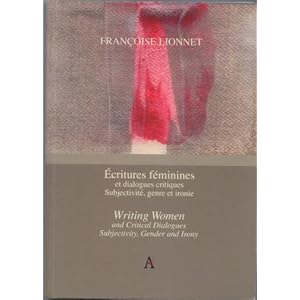
Françoise Lionnet, professor in the Department of Comparative Literature, director of the African Studies Center, and faculty affiliate at the UCLA Center for the Study of Women, has recently published two books in the small island nation of Mauritius in Africa.

"Being able to publish in Mauritius was important for me because it was a chance to actually put my work in front of people who know best what I’m talking about. If I’m going to get constructive or useful reactions, I need to get it from there more so than from my colleagues in the U.S.," says Professor Lionnet.

These books, "The Known and the Uncertain: Creole Cosmopolitans" and "Writing Women and Critical Dialogues: Subjectivity, Gender and Irony" are also recognized by their French titles, "Le su et l’incertain: Cosmopolitiques créoles de l’océan Indien" and "Ecritures féminines et dialogues critiques."

For more information about Professor Lionnet and her work, see the UCLA Today article Scholar raises profile of life and literature of little-known island nation.


Monday, August 27, 2012

Feminist organization Teen Talking Circles to hold a benefit concert with Deva Primal and Miten and Lindsay Wagner

Teen Talking Circles, a non-profit organization dedicated to helping and supporting teenagers, is holding a benefit concert on September 9, 2012 to introduce the organization to the Southern California area.  The concert, by Deva Primal and Miten, who are known for their sacred chants, will be held at 747 Wing House in Malibu.  Constructed on the property of Tony Duquette, which burned in a 1993 Malibu fire, the house is created from a 747 recycled airplane.  Lindsay Wagner, who played The Bionic Woman on the television show of the same name from 1976-1978, will host the event.  In addition to the concert, attendees of this benefit will learn more about the organization from Teen Talking Circles’ small staff, and from teens and parents of teens who have participated in their circles and retreats.

Teen Talking Circles was created after the 1997 publication of Executive Director Linda Wolf’s book Daughters of the Moon, Sisters of the Sun: Young Women and Mentors on the Transition to Womanhood.  The book described how the author, with co-author Wind K. Hughes, led “circles”: gatherings of teen girls at which they would discuss their experiences.  The events were inspired by second wave feminist consciousness raising groups, which Wolf found enormously helpful to her development in the 1960s.  She felt that, in the 1980s (characterized by some as a period of anti-feminist backlash), these useful resources for young women had disappeared.


“[The book] sold 20,000 copies pretty quickly,” writes Wolf, who is also a professional photographer, in correspondence with CSW. “We received so many requests for information as to how we managed to have teen girls show up for 2 years, weekly, to talk (and listen) to each other, that my co-author and I developed a facilitator's training in order to accommodate the requests.” 


During the last 20 years, Teen Talking Circles has offered trainings, books, women’s retreats, and circles (for both women and men).  Recently, the Daughters Sisters Project—a program of the organization—sponsored the photography project, I Am a Full Woman.  The project, which is a candidate for exhibition at a museum in Washington, DC, includes contemporary portraits of women from all walks of life, taken by Wolf during her travels in China, Thailand, India, Mexico, Guatemala, the USA, Europe, Africa, Iran, and Israel/Palestine. 


I Am a Full Woman from Linda Wolf on Vimeo.

Deva Primal and Miten, who will be performing at the benefit, sat in one of the organization’s circles and shared some of their chants in 2007. Wolf is delighted that they’ve volunteered their time for the upcoming benefit. “Deva Primal and Miten are extraordinary influences in the movement for health and wholeness,” says Wolf, “and their sacred chants, mostly East Indian, have inspired many people.”


There are only 15 tickets left to this event!  Tickets are $90, and with additional contributions participants will have the options to tour the main house and extensive gardens with architect David Hertz and join Teen Talking Circles’ staff and participants and actress Lindsay Wagner for an intimate after-party.  

For more information, or to purchase tickets, visit: http://www.teentalkingcircles.org/deva/, or https://www.facebook.com/events/141243319350354/


To learn more about Teen Talking Circles, visit their website at www.teentalkingcircles.org.


View interviews with Linda Wolf and Jean Kilbourne (maker of the film Killing Us Softly, and President of the group’s board for over a decade) here: http://www.youtube.com/watch?v=nyigeQ_VgEo&feature=relmfu


Teen members of the Girl’s Talking Circle, the Guy’s Talking Circle, and Gender Talks Circle on Bainbridge Island, WA talk about why the organization is important to them:  http://www.youtube.com/watch?v=bnQ2cS9LoXc&feature=relmfu


-Ben Sher


Monday, August 20, 2012


Lois Leveen, whose dissertation, The Race Home: Difference and Domestic Space in American Literature and Culture, was awarded CSW’s Jean Stone Dissertation Fellowship in 1997 and the George Elliot Dissertation Prize in 1999-2000, has taken her dissertation project in a unique and valuable new direction.  Leveen, who received her Ph.D. from UCLA’s English department in 1999, recently completed a historical novel partially based on her dissertation work, The Secrets of Mary Bowser.  The novel, published by HarperCollins/William Morrow, has been selected by Target as their August book club pick, an honor that will ensure that a huge number of people will read her book.

“Buried deep in my dissertation was a brief reference to Mary Bowser, a former slave who became a Union spy,” writes Leveen, in recent e-mail correspondence with CSW.  “My life hasn’t taken the usual path of tenure-track job, although I’ve worked in education in many forms and done lots of ‘public humanities’ programs along the way.  The latest, and greatest of which is that rather than turn the dissertation into a scholarly tome, I wrote a novel…to introduce non-academic readers to Bowser, and to what her story represents in terms of the roles women played in the anti-slavery [movement].”

Leveen is thrilled that converting her academic research into a popular novel has allowed the work to reach such a wide and varied audience. 

“I am bursting at the seams at the idea that folks will be learning this bit of black women’s history, as they pick up their usual Target run of supplies,” writes Leveen.  “There are more Targets than there are Barnes and Nobles in this country, and Target book shoppers are often people who don’t otherwise wander into a bookstore.  Target lets a book club of its store employees pick each month’s selection, so it’s a populist vote in the truest sense.  Thanks to them, the nation at large will be learning some of what I learned in grad school.”

Indeed, Leveen points out that she’s still a teacher at heart.  “It's exciting to know that colleagues--including some of my fellow UCLA graduates--will be teaching the book,” says Leveen.  She has prepared an interdisciplinary teaching guide that can be downloaded from her website (see link below).

Leveen emphasizes that her achievements have been strongly influenced by CSW and its efforts to bolster the work of graduate students.  She writes: “I remain indebted to the support you provided, long before I ever imagined I’d be a novelist.”

Visit Lois Leveen’s website:www.loisleveen.com
Download Leveen’s teaching guide for The Secrets of Mary Bowser:http://loisleveen.com/index.php/site/for-teachers
Visit Lois Leveen on facebook:http://www.facebook.com/LoisLeveen

Monday, August 6, 2012

Report from the Field: Women at the 2012 Summer Institute on American Philosophy


From July 15 to 22, I attended the Summer Institute on American Philosophy an annual program of the Society for the Advancement of American Philosophy, in Eugene, OR. My paper, ”Reading Dewey Reading Addams as Philosopher” (concerning John Dewey, the late nineteenth–early twentieth-century philosophy professor, and Jane Addams, the famed co-founder of the pioneering community center called "Hull House"), was scheduled in a session titled “Feminist Pragmatism.” I pointed out (with specialized input from Charlene Seigfried of Purdue University in the audience and Marilyn Fischer of the University of Dayton as the chair) how in his invited preface to a reprint of Addams’ book on her pacifist activities in World War I, Peace and Bread in Time of War, Dewey shows how Addams’ pacifism differed from that of her colleagues by being at bottom philosophical and suggested that this was a way to get pacifist skeptics to reconsider her argument in the book for giving up traditional political ways to organize international government and replace them with democratic methods inspired by the immigrants’ organizations at Hull House.

My fellow presenter in the session, Katherine Logan of the University of Oregon, gave a learned, relevant paper around the topic of so-called work/life balance in the serious, little-studied work of legal scholar Joan Williams. This presentation led to a very suggestive discussion about how second wave–type feminism is now marginalized in the academy despite the fact that its goals have only been partially achieved. The session was the only session of eight on women philosophers; however, one of the three sessions featuring dissertations-in-progress, which is a regular feature of SIAP, included “The Contested Environmental Voice: Pragmatism and Feminism,” by Tess Varner of the University of Georgia. One of the three sessions featuring books in progress, also a regular SIAP feature, showcased a textbook, to be titled American Philosophy: A Tradition of Resistance, on American philosophy since the 1890s by Erin McKenna and Scott Pratt. The text includes numerous women, familiar and unfamiliar, in every chapter, including Sojourner Truth, Margaret Sanger, Martha Nussbaum, Angela Davis, and Gloria Anzaldua. More importantly, one of the three plenary sessions involved a woman philosopher: “Rereading Dewey through Addams,” with Marilyn Fischer of University of Dayton and Amrita Banerjee of Oregon State University. Fischer’s scholarly yet daring paper suggested among other things that in some respects Dewey’s work was conservative, a claim that inspired energetic discussion.

Most importantly of all from the point of view of feminism, a woman philosopher by herself was the topic of the two-part keynote by Charlene Haddock Seigfried, Purdue University. Prof Seigfried, a distinguished William James scholar who opened the discipline of American philosophy to feminist scholarship in 1991 by asking the question, “Where are all the Feminist Pragmatists?”, and by showing a way to answer it in 1996 with her book Feminism and Pragmatism: Reweaving the Social Fabric. Seigfried’s two-part address—“Claiming Authority: Jane Addams Constructs a Social Self,” on the autobiographical opening chapters of Twenty Years at Hull House, and “The Social Self in Addams’ Prefaces and Introductions,” on Addams’ other nine authored or co-authored books—was drawn from chapters of her book in progress. Clearly, Jane Addams received a gratifying amount of attention at the event; however, there was a general lack of attention to other women philosophers.

A plenary seminar on Harlem Renaissance philosopher Alain Locke,“Critical Pragmatism and Insurrectionist Ethics,” did mention a few women, including Maria Stewart and Lydia Maria Child, as insurrectionists. Another book-in-progress session, by Professor Doug Anderson of Southern Illinois University, was about Common Sense Saints: Fuller, Marley, Anzaldua, and Thoreau, a book that includes Margaret Fuller and Gloria Anzaldúa as titular subjects on a level with Marley and Thoreau. Unfortunately, my own paper was scheduled at the same time so I was unable to attend. Although women presenters were unusually well represented in the most dignified places, more female voices would have been welcome in the sessions. There may be a connection between the lack of visibility of women philosophers (other than Addams) and the comparative lack of women who submit proposals. Male outnumbered female attendees twice over. Although not explicitly about women philosophers, next year’s plenary sessions, “Feminist Interpretations of William James” by Shannon Sullivan and “Indigenous Philosophy,” may inspire more proposals about feminist philosophy and (indigenous) women philosophers respectively. Altogether, SIAP 2012 was an inspiring, educational, and enjoyable intellectual experience.

—Carol Bensick

Carol Bensick is a CSW Research Scholar. Her current research project, titled “The Rise and Stall of Feminist Women's History of Philosophy: Help from the Archives of Julia Ward Howe,” concerns a female philosopher. Detailed primary and secondary texts pertaining to Julia Ward Howe prove that the work of women who read, taught, discussed, and even published on great texts of philosophy with elite university faculty could vanish with their deaths not because their philosophy itself had been discredited or refuted but for no other apparent reason than that their gender caused discomfort, displeasure, or disapproval in their contemporaries—including their own children. This project will document Howe's work and legacy.


Wednesday, July 25, 2012

According to Ben: Outfest 2012!

Outfest 2012
 It’s always so exciting to see the huge diversity of films and videos that pop up at any LGBTQ film festival, and the many lives and stories that they make visible. At this year’s Outfest, documentaries included How to Survive a Plague (2012, David France), which chronicles the AIDS crisis and the founding of ACT UP; Homeboy (2011, Dino Dinco), recounting the lives of gay Latino men who are former gang members; I Am a Woman Now (2011, Michiel Van Erp), about a group of 70-something year old transwomen; and Children of Srikandi (2012, Imelda Taurinamandala), in which eight women seek to answer the question: “What is life like for lesbians and transwomen in Indonesia?” Fictional features included Margarita (2012, Dominique Cardona and Laurie Colbert), about a Mexican woman working for a Canadian family whose full life threatens to become up-ended when she is fired because of financial hardships; Facing Mirrors (2011, Negar Azarbayjani), in which a tense relationship forms between an Iranian woman cab driver and a transgender man desperately awaiting a passport that will help him to escape to Germany and have gender reassignment surgery; and Cloudburst (2012, Thom Fitzgerald), a road movie starring Olympia Dukakis and Brenda Fricker as a randy lesbian couple driving to Canada to get married. I, regrettably, was only able to see three Outfest films this year—but all were memorable.

Jeffrey Schwarz’s Vito
The festival opened with Jeffrey Schwarz’s Vito (2012), a new documentary about Vito Russo, the renowned activist and film historian. Perhaps best known for writing The Celluloid Closet, Vito was sort of a Zelig of post-war LGBTQ life: He watched the Stonewall riots from a nearby tree, started the first predominantly queer screenings of Hollywood films, and co-founded The Gay Activists Alliance, GLAAD, and ACT UP. Unlike Zelig, he was characterized by fierce individuality, which is wonderfully documented in Schwarz’s film. Archival footage of Vito, who died from AIDS complications in 1990, allows him to narrate his own groundbreaking story. Schwarz also uses a great deal of stunning archival material to document Vito’s life, and the ways in which he both shaped and was shaped by his tumultuous times. Schwarz has said that he made Vito partly because many people who grew up after the 1980s are not aware of him and his accomplishments. This wonderful film gave me the feeling that we need Vito more than ever, and I suspect many will agree once they see  film, which will air on HBO (and HBO On Demand) in the coming months. Vito adored popular narrative movies, and he continuously demonstrated that film spectatorship can be its own form of important authorship. Because of this, it feels immensely gratifying to watch Vito, which lets him star in a movie of his life that is as riveting and moving as a great Hollywood epic, and a hundred times smarter and more honest about queer life. I think that Vito would have loved it.

Earlier this year I think that I scandalized some of the students in my queer film class by saying that I think any depiction of LGBTQ sex on screen is great. In the town where I grew up, sex scenes in movies were not to be watched and discussed, and queer sex scenes in movies just didn’t exist in the collective consciousness. Even now, in these “more accepting times,” queer sex is still the aspect of queerness that homophobic America most fears and wants to repress. Images of queer couples at the altar, or having barbeques with their children, are infinitely more acceptable than naked queers in the throes of passion. This fact manifests itself in much of our popular culture: it took an online protest campaign to get Cameron and Mitchell, the current pinnacles of acceptable mainstream queerness, to share a chaste kiss on Modern Family. The sex scene between Julianne Moore and Annette Bening in The Kids are All Right (2010) had to be a slapstick farce, while the sex scene between Moore and Mark Ruffalo could be cathartic and “hot.” This cultural context gives me added appreciation for Travis Matthews’ I Want Your Love (2012) which, like John Cameron Mitchell’s Shortbus (2006), makes a noble, welcome, and political effort to incorporate unsimulated sex with an engaging story and well-developed characters.  

Travis Matthews’ I Want Your Love
I Want Your Love presents a few days in the life of Jesse (Jesse Metzger), a struggling performance artist in San Francisco. He prepares to move back to his midwestern home town after finding that he can no longer afford to live in the city. The film chronicles his and his friends’ interactions as they prepare for and deal with his imminent departure (a plot structure that, although reminiscent of 1986’s Parting Glances and 2011’s Weekend, nonetheless yields limitless possibilities). I Want Your Love is likable and engaging, but uneven. Some of the film’s dialogue scenes ring true: as friends and roommates, Jesse and Wayne (Wayne Bumb) seem like they’ve been confidantes for a decade, as they discuss Jesse’s transition and Wayne’s fear that his boyfriend will make him clean up his mess when he moves in. Being used to pop culture’s favoring of rich, white, toned gay people, I thrilled at seeing a multi-racial cast of characters with different body types, some of whom struggle financially. Other scenes of dialogue seem hollow and underdeveloped, especially those between ex-lovers Jesse and Ben (the very charming Ben Jasper). However, the movie’s sex scenes consistently shocked me with the depths of intimacy that they convey. Messy, hot, and often sweet, they reveal some of the infinite number of ways in which people use sex to communicate and meet needs. The movie illustrates more about its characters and their relationships with moving bodies than words, which I found striking and wonderful to watch. A week after seeing it, I am more forgiving of what I perceived to be its weaknesses and grateful for its strengths. I find myself wanting to remember the time I spent with these characters. 


I anticipated the Los Angeles premiere of Jonathan Caouette’s new film Walk Away Renée (2011) like others anticipate summer blockbusters. His Tarnation (2003) is a favorite of mine, and I feel an unusual connection with his unique way of processing the world and his experiences. Walk Away Renée shifts focus from Jonathan’s own life journey to his relationship, as an adult, with his mother Renée, who has been diagnosed with acute bipolar and schizoaffective disorder. The film chronicles their journey from his mother’s home in Houston, TX to an assisted living facility in Rhinebeck, NY, closer to Jonathan’s house in Astoria, Queens. The film goes back and forth in time, presenting the layers of history that inevitably inform every moment of their trip. When Renée’s medications are misplaced, they both find themselves in a sort of purgatory, as both her Texas and New York doctors refuse to write prescriptions to a woman who is no longer the patient of one and not yet a patient of the other. As Renee’s condition worsens, the film becomes a devastating and sometimes frightening depiction of the effects of a mental health care system that prevents its practitioners from helping those that accidentally fall through the cracks of its policies.

Several critics called Tarnation exploitative of its subjects. I understand this argument, but I have never agreed with it, and I find it even harder to do so after Walk Away Renée. Caouette strikes me as an enormously compassionate person and filmmaker, and this film exudes love: the love that Jonathan, Renée, Jonathan’s partner David, his grandfather Adolph, and his son Joshua have for one another, and Jonathan’s love for the subjects and spaces he documents (ranging from a sparkling waterfall to the streets of New York to movie memorabilia in his house). The film is finally a deeply moving portrait of a group of peoples’ successful efforts to help themselves and each other live fundamentally good lives while rolling with some nasty punches.

Vito Russo happily titled his article about the 1987 San Francisco Gay Film Festival “Visions of Our Lives.” I’m so grateful that Outfest, and LGBTQ film festivals everywhere, continue to bring us such varied visions. I look forward to seeing what Outfest, and The Outfest Legacy Project (a collaboration with The UCLA Film & Television Archive devoted to preserving LGBTQ films), will bring us in the coming year.  
—Ben Sher

Ben Sher is a graduate student in the Cinema and Media Studies Program at UCLA and an editorial assistant and graduate student researcher at CSW.

Tuesday, July 3, 2012

Women, War and Political Empowerment: Notes from Rwanda


Kigali, Rwanda. It was recently named the cleanest capital city in the world by the UN. Photo by author

I arrived in Rwanda for the fourth time in early May to conduct the final phase of my dissertation research on women’s political empowerment. Kigali has changed dramatically since my last trip here in 2009—more streets are paved, high-rise buildings dot the horizon, and the country’s impressive economic growth is visibly apparent. Led by President Paul Kagame, Rwanda has made
significant
progress since the 1994 genocide that devastated the country.  Just last week the controversial Gacaca court system—designed to quickly and efficiently prosecute the estimated one million suspected genocide perpetrators—was declared finished. Perhaps most famously, Rwanda has been heralded for its successful promotion of gender equality and currently has the world’s highest percentage of women in Parliament (56%). While these achievements have garnered international praise, the Rwandan government is increasingly coming under scrutiny for its human rights practices, its rumored support of the bloody war in Congo, and its heavy-handed control over the daily lives of its citizens.

 2012 meeting of the Rwandan National Women's Council attended by members of the NWC, parliamentarians, and civil society representatives. Photo courtesy of Ministry of Gender and Family Promotion 2012, Rwanda


My fieldwork here has thus been caught in an interesting trap. On one hand, I’m looking at the tremendous progress women in Rwanda have made since the genocide. Women’s mobilization after violence in community organizations, local women’s councils, and eventually in national politics represented a dramatic shift away from the male-dominated political realm before the violence. Before the genocide, as one parliamentarian told me, “Politics…was a male domain. It was like their personal bedroom where no one else could go in.” After the genocide, however, women began to take on key roles in their households and communities by caring for orphans; rebuilding houses; and finding food, shelter, and healthcare. Thousands of informal associations of women formed after the violence to address these immediate needs, and these groups became the locus for sustained collective action. Many women who joined these grassroots associations eventually ended up in national politics, and the Government of Rwanda played a key role in their advancement
National Parliament, Kigali, Rwanda. The political progress in Rwanda is often juxtaposed with the memory of recent violence — here the Parliament of Rwanda, home to the highest percentage of female legislators in the world, is deliberately left damaged from artillery and grenades during the genocide 18 years ago.

On the other hand, I’m constantly running into the appendages of a strong, authoritarian state, and finding evidence that “women’s empowerment” in Rwanda is full of contradictions and far from complete. A recent debate centered on a bill passed by Parliament that absolves criminal liability for women who get abortions under certain circumstances (such as when the pregnancy originated in rape, incest, or a forced marriage, or when the life of the mother is at risk). This highly controversial bill comes at a time when hundreds of girls in Rwanda are in jail for seeking abortions, and, according to the Ministry of Health, an estimated 60,000 abortions are conducted illegally every year—40% of which lead to medical complications that require treatment. 
At the root of the abortion debate is the inconsistent development between the core and the periphery of the country, and the tension between implacable government regulations and the ability of ordinary citizens to accommodate them. Millions of Rwandans have been left out of the country’s impressive economic development. They are “stuck”—as Marc Sommers has described them—between deeply engrained cultural expectations about marriage, sexuality, and gender roles, and a country that is rapidly advancing and actively promoting women’s rights. Last week a woman in her mid-twenties told me that she couldn’t possibly go to the health center to get birth control because she is “still a girl”—in Rwanda, you are a girl (umukobwa) until you are married. Yet, there are 9 men for every 10 women in this country, and housing and land shortages mean that traditional marriage expectations are increasingly hard to fulfill. This country also has with a national health care plan that provides free or low cost family planning resources to anyone who wants them.

My research here thus faces the challenge of balancing the various ways in which women’s progress is understood. As I interview women in politics and civil society organizations, I remain optimistic that the gains at the national political level will eventually translate to progress for the masses but I also remain unconvinced.
— Marie Berry

Marie Berry, a Ph.D. candidate in the Department of Sociology at UCLA, recently received A CSW Jean Stone Dissertation Research Fellowship. She holds an B.A. with honors from the Jackson School of International Studies at the University of Washington and an M.A. from the Department of Sociology at UCLA. Her dissertation, “From Violence to Mobilization: War, Women, and Political Empowerment in Rwanda, Bosnia, and Beyond,” explores the effects of mass violence on women’s participation in politics and community organizations in Rwanda and Bosnia-Herzegovina. In 2010 she joined the Board of Directors of Global Youth Connect, an organization that empowers youth to advance human rights through cross-cultural training programs in post-conflict countries. 

Photos: Top: Kigali, Rwanda. It was recently named the cleanest capital city in the world by the UN. Photo by author Middle: 2012 meeting of the Rwandan National Women's Council attended by members of the NWC, parliamentarians, and civil society representatives. Photo courtesy of Ministry of Gender and Family Promotion 2012, Rwanda. Bottom: National Parliament, Kigali, Rwanda. The political progress in Rwanda is often juxtaposed with the memory of recent violence — here the Parliament of Rwanda, home to the highest percentage of female legislators in the world, is deliberately left damaged from artillery and grenades during the genocide 18 years ago.