Wednesday, October 17, 2012

UCLA Queer Studies Conference 2012: Friday, October 19


Organized by Maylei Blackwell and Uri McMillan, Queer of Color Genealogies, the UCLA Queer Studies Conference 2012, will take place this Friday, October 19, in 314 Royce Hall. Free and open to the public, the conference will feature four panels and two keynote addresses on a variety of Queer Studies topics. The panels of the one-day conference are: "Addressing the Community Needs of LGBT Youth of Color," featuring Laura E. Durso
, Angeliki Kastanis
, and Lisa Powell; "Queer Indigeneities Unsettling Settler Colonialism," featuring Jodi A. Byrd
, Qwo-Li Driskill, and 
Dan Taulapappa McMullin; "The Other Archive of Desire: Remapping LGBT Histories," featuring Kai M. Green, Alexis Pauline Gumbs, 
Horacio N. Roque Ramírez, and Alice Y. Hom; and "Transnational Aesthetics/Erotics," featuring Vanessa Agard-Jones, 
Chitra Ganesh, Lawrence La Fontaine-Stokes, and 
Roy Pérez. Panel presenters include scholars from a range of universities, as well as non-academic professionals in fields such as law and art. 

Sandra K. Soto, Associate Professor of Gender and Women's Studies, University of Arizona, is the morning keynote speaker. Her presentation is titled “For Those Who Were Never Meant to Survive: Queering Attrition in Arizona.” Soto's work focuses on Chicana/o and Latina/o literary and cultural studies, feminist theory, gender studies, and queer theory. Her latest, in-progress book uses queer theories to explore how critical transnational studies and U.S. ethnic studies connect in unexpected ways. At the University of Arizona, Soto is an Executive Committee Member of the Institute of LGBT Studies, as well as an affiliate of English, the Center for Latin American Studies, and the Mexican American Studies and Research Center.

Jafari Sinclaire Allen, Assistant Professor of Anthropology and African American Sudies, Yale University, is the afternoon keynote speaker. His presentation is titled “All the Things We Are Now: A Meditation on Black Queer Genealogies.” Allen’s work explores (queer) sexuality, gender, and blackness. He teaches courses on the cultural politics of race, sexuality, and gender in Black diasporas; Black feminist and queer theory; and ethnography methodology and writing, among other subjects. Allen has written ¡Venceremos?: The Erotics of Black Self-Making in Cuba (Duke University Press, Fall 2011) and edited Black/Queer/Diaspora, a special issue of GLQ: A Journal of Lesbian and Gay Studies. He is currently researching cultural and political circuits of transnational queer desire in travel, tourism, (im)migration, art, and activism.

Maylei Blackwell is an Assistant Professor in the César E. Chávez Department of Chicana/o Studies and Women's Studies Department, and is affiliated faculty in the American Indian Studies and Lesbian, Gay, Bisexual, and Transgender Studies departments. Her research analyzes how women's social movements in the U.S. and Mexico are shaped by race, indigeneity, class, sexuality, and citizenship status, and how these factors impact the possibilities and challenges of transnational organizing. Most recently, she has sought to understand new forms of grassroots transnationalism by conducting research with farm worker women and indigenous migrants. Her latest book is ¡Chicana Power!: Contested Histories of Feminism in the Chicano Movement (University of Texas Press, 2011).

Uri McMillan is an Assistant Professor in the Department of English. His research interests include cultural studies, feminist theory, queer studies, African American literature, and post-colonial literature and theory, and he has taught courses on contemporary African American literature, U.S. gay and lesbian history, post-Stonewall GLBT literature, narratives of racial difference, and Black and Latino popular culture and performance, among other topics. He has a manuscript titled Embodied Avatars: The Art of Black Performance under contract at New York University Press.


The UCLA Queer Studies Conference 2012 has been organized by Maylei Blackwell and Uri McMillan for the UCLA Lesbian, Gay, Bisexual, and Transgender Studies Program, with generous support from:

David Bohnett Foundation, UCLA Division of Humanities, UCLA Division of Social Sciences, UCLA Graduate Division, UCLA Office of Faculty Diversity and Development, UCLA Institute for Society and Genetics, UCLA Williams Institute for Sexual Orientation Law and Public Policy, UCLA Bunche Center for African American Studies, UCLA Asian American Studies Center, UCLA Chicano Studies Research Center, UCLA Center for Jewish Studies, UCLA Center for the Study of Women, UCLA Interdepartmental Program in Afro-American Studies, and the UCLA departments of Anthropology, Art History, Asian American Studies, Asian Languages and Cultures, Chicana/o Studies, Comparative Literature, English, Film Television and Digital Media, French and Francophone Studies, Gender Studies, Germanic Languages, History, Information Studies, Musicology, Psychology, Sociology, and Theater.

For more conference information, visit: http://lgbtstudies.ucla.edu/events/upcoming-events.html

Monday, October 8, 2012

Charis Thompson: "Three Times a Woman: A Gendered Economy of Stem Cell Innovation"

Charis Thompson
It's often argued that the methods of science reflect and reinscribe the theories and contradictions concerning gender and sexuality. In terms of the "stem cell science of gender," the debate engages theories concerning the moral status of the asexual embryo of somatic cell nuclear transfer, and the problem of how one can legitimately characterize the status of an embryo (for which there is no meiosis, no fertilization) within a heteronormative ethical framework. Charis Thompson—professor and chair of the Department of Gender and Women's Studies at UC Berkeley and associate director of the UC Berkeley Center for Science, Technology, and Medicine in Society—has spent her career engaging such bioethical concerns from a plethora of angles, situating the debate in its scientific, technical, moral, political, and financial ramifications. Her work explores the area in terms specific to stem cell research and its legislature, as well as to the bioethics of assisted reproductive technologies. As Thompson argues, social problems are increasingly funneled through questions of biomedicine, and so it has become the task of the bioethicist and the public alike to assess such problems within full view of the "choreography" of biology, society, and the individual, to the broad range of political and moral possibilities inherent in the development of technoscience.


Making Parents: The
Ontological Choreography of
Reproductive Technologies
(MIT Press, 2005)
Beyond inquiry into the ontological status of the asexual embryo and its associated politics, Thompson has argued that the gendering of regenerative (stem cell) medicine as a practice is complicated on two fronts: the rise of egg donation for research as the women's issue and the role of the market (as well as the academy and public) in "procurial" life science. The question of whether egg donor protection is by nature an instrinsic women's issue is further negotiated within the intersection of national and transnational economies, as well as economic health care disparity as it concerns race and class, policy and national health care priorities, and the public interest.


Thompson's upcoming presentation, "Three Times a Woman: A Gendered Economy of Stem Cell Innovation," promises to be a powerful insight into the gendered divisions inherent in the institution of regenerative medical research. The presentation, organized by the UCLA Center for the Study of Women, will be held Wednesday, October 24th, at 3 pm in Humanities 193.

Tuesday, September 11, 2012

According to Ben: Hollywood's Summer Fare

At first glance, this year’s mainstream American summer movies seem predictably dominated by male superheroes and other archetypes meant to appeal to teenage boys:  Abraham Lincoln resurrected as a vampire hunter, Will Ferrell and Zack Galifianakis as competing politician buffoons, Mark Wahlberg as a slacker with a beloved talking teddy bear and a long suffering girlfriend.  It was exciting to see that Christopher Nolan emboldened his female characters in The Dark Knight Rises, but still slightly frustrating that its deliciously cast female characters (Anne Hathaway’s Selina/Catwoman and Marion Cotillard’s Miranda), described by many as the highlights of the film, were relegated to the sidelines.  But I’ll try to avoid the knee-jerk griping. What films did this summer provide that were made for, about, or by women, and how did they hold up? 

Tim Burton’s Dark Shadows adapts a soap opera that has some of my favorite strong female characters in television history: company head/matriarch Elizabeth Collins Stoddard, the hard-edged and mysterious Dr. Julia Hoffman, and vengeful diva witch Angelique.  Michelle Pfeiffer, Helena Bonham Carter, and Eva Green do justice to these great characters (originally played by Joan Bennett, Grayson Hall, and Lara Parker).  I can’t say the same about the screenplay.  In particular, Dr. Julia Hoffman, whose manipulative face-offs with Barnabus Collins were essential to the series’ delicious drama, is pushed in the background and reduced to a few punch lines and a last minute plot twist that seem rushed and somewhat inexplicable.

I did not see Snow White and the Huntsman, although I heard that Charlize Theron gives the most over-the-top, operatic insecure evil mother performance since Faye Dunaway snarled “And I hear them say she’s getting old!” in 1981’s Mommie Dearest.  Is this the kind of female representation I want in the only truly femme-centric, live action summer blockbuster?  Not really.   But between Snow White and the Huntsman and Prometheus, I’m glad to see that Theron is back.  I also loved the praise heaped on the documentary Katy Perry: Part of Me (co-directed by Jane Lipsitz) by people ranging from film critics to Jane Fonda!  Finally, Madonna: Truth or Dare for our times.

Many have said that women and gay men made Magic Mike a hit, and you can count me as one of them.  I completely agree with Manohla Dargis, who pointed out that the film reverses “the old cinematic divide between the sexes that finds so-called passive women who are looked at by so-called active [heterosexual] men.” I have to admit that I found it pleasurable to see men gleefully objectified.  When Channing Tatum dances, there is no question that he’s a movie star.  He’s even pretty charming when he speaks.  That said, I found the movie’s reverse fallen-woman plot less engaging than its scenes of spectacle.  I know that two wrongs don’t make a right.  But it seems unfair that Paul Verhoeven’s fallen-woman picture about contemporary stripping (dancing!), 1996’s Showgirls, is a bitchy, backstabbing blast, while Magic Mike (which has practically the same plot structure) insists that we wallow in Mike’s nobility.  Joanna, Adam’s tough, realistic sister (played by Olivia Nunn), who tries to balance her own career while dealing with Adam’s drama, was, for me, the most compelling aspect of the film’s narrative.

The summer’s animated films brought with them many thrilling surprises.  Brave (co-written and co-directed by Brenda Chapman) introduced Pixar’s first female protagonist after 10 male-dominated films.  The story of Merida, who must rely on her archery skills to undo a beastly curse, continues in the happy tradition begun with the success of Spring’s blockbuster The Hunger Games.  I will never tire of movies geared towards young people that feature women utilizing their archery skills to survive and potentially overthrow patriarchal villainy.  Paranorman, about a boy whose best friends are horror movies, ghosts, and Elaine Stritch, finally, after 29 long years, gave me a character whose life directly resembles my own. The story’s plot revolves around Norman’s efforts to mollify a witch who has placed a curse on his small town.  He seeks help from, among others, an openly gay jock and a fabulously feminist, confident, bookish classmate who questions why witches must always be portrayed as ugly.  The movie’s gender dynamics, its complication of “good” and “evil,” and its powerful portrayal of mainstream society’s fierce efforts to crush difference are exhilarating and delightful to behold.  For me, Paranorman was the must see movie of the summer.  It is that rare animal in Hollywood: a feel -good film that tells the truth about life’s darkness.  I saw it twice in one weekend.


Watching Paranorman, I kept thinking something that I almost never think while watching contemporary Hollywood fare: “This is such a sane movie.”  Miraculously, I felt the same way watching Hope Springs, the ceremonial Meryl Streep summer vehicle.  She and Tommy Lee Jones play a middle aged, middle class couple who try to revivify their marriage and their sex-life with help from therapist Steve Carrell.  Hope Springs, written by Vanessa Taylor, is a mid-budget Hollywood dramedy that takes the issues of middle aged people seriously while still inspiring genuine, smart, laughs.  It’s a romantic comedy that dares to explore what happens long after the couple meets and gets together.  In other words, it’s a unicorn.  I haven’t seen such beautifully acted, uncomfortably realistic therapy sequences since the 1970s.  Speaking of which, I am so delighted that this film rectifies one of my pet peeves by making the bold and shocking suggestion that therapy can actually help people deal with their problems.  Usually it seems (to me, anyway) like films only offer romantic attachment or violence as possible solutions.

It was with some trepidation that I attended Sparkle, a remake of the 1975 film of the same name.  I had to see it because I am in love with girl groups, 1970s cinema, and, of course, Whitney Houston.  I could not miss the opportunity to see her doing something new one more time, even though I knew that it would depress me.  Sparkle (written by Mara Brock Akil) is depressing because Houston still had the intense charisma, screen presence, and vocal power (if not vocal range) that made us love her.  It confronted me, once again, with all that I miss.  However, it’s even more depressing because its most engaging, forceful sequences fetishize the self-destruction of Sister (electrifying Carmen Ejogo), a beautiful, talented, ambitious singer who is punished for her confidence and quick (somewhat unrealistic) rise to fame with drug addiction and a viciously abusive husband.   The movie preys on what it perceives (accurately, perhaps) as the audience’s craving for the destruction of the beautiful and talented.  A deliriously stylized, visually graceful sequence in which Sister’s husband (Mike Epps) beats her with a belt is as odd and confounding as it is disturbing.   I’ve seen Lady Sings the Blues (1972), The Rose (1979), and What’s Love Got to do With It (1993), and I feel like I have seen this story enough.  Like the original, Sparkle offers an alternative option for talented black women in the wholesome rise of its title character, played by the very charming (if hardly electrifying) Jordin Sparks.  But why do movies like Dreamgirls (2006) and Sparkle insist that in order for one talented woman to rise, another must fall?  I know that these movies are, more and less, based on real stories: Billie Holiday, Janis Joplin, Tina Turner, Diana Ross, Florence Ballard, Amy Winehouse, Whitney Houston.  I suppose that I want our culture, and the movies, to come up with different scenarios for its most brilliant performers.  

-- Ben Sher

Tuesday, September 4, 2012

Contributing to the Cultural Capital of Mauritius

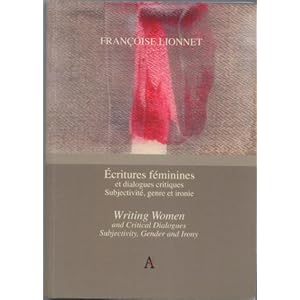
Françoise Lionnet, professor in the Department of Comparative Literaturedirector of the African Studies Center, and faculty affiliate at the UCLA Center for the Study of Women, has recently published two books in the small island nation of Mauritius in Africa.

"Being able to publish in Mauritius was important for me because it was a chance to actually put my work in front of people who know best what I’m talking about. If I’m going to get constructive or useful reactions, I need to get it from there more so than from my colleagues in the U.S.," says Professor Lionnet.

These books, "The Known and the Uncertain: Creole Cosmopolitans" and "Writing Women and Critical Dialogues: Subjectivity, Gender and Irony" are also recognized by their French titles, "Le su et l’incertain: Cosmopolitiques créoles de l’océan Indien" and "Ecritures féminines et dialogues critiques."

For more information about Professor Lionnet and her work, see the UCLA Today article Scholar raises profile of life and literature of little-known island nation.


Monday, August 27, 2012

Feminist organization Teen Talking Circles to hold a benefit concert with Deva Primal and Miten and Lindsay Wagner

Teen Talking Circles, a non-profit organization dedicated to helping and supporting teenagers, is holding a benefit concert on September 9, 2012 to introduce the organization to the Southern California area.  The concert, by Deva Primal and Miten, who are known for their sacred chants, will be held at 747 Wing House in Malibu.  Constructed on the property of Tony Duquette, which burned in a 1993 Malibu fire, the house is created from a 747 recycled airplane.  Lindsay Wagner, who played The Bionic Woman on the television show of the same name from 1976-1978, will host the event.  In addition to the concert, attendees of this benefit will learn more about the organization from Teen Talking Circles’ small staff, and from teens and parents of teens who have participated in their circles and retreats.

Teen Talking Circles was created after the 1997 publication of Executive Director Linda Wolf’s book Daughters of the Moon, Sisters of the Sun: Young Women and Mentors on the Transition to Womanhood.  The book described how the author, with co-author Wind K. Hughes, led “circles”: gatherings of teen girls at which they would discuss their experiences.  The events were inspired by second wave feminist consciousness raising groups, which Wolf found enormously helpful to her development in the 1960s.  She felt that, in the 1980s (characterized by some as a period of anti-feminist backlash), these useful resources for young women had disappeared.


“[The book] sold 20,000 copies pretty quickly,” writes Wolf, who is also a professional photographer, in correspondence with CSW. “We received so many requests for information as to how we managed to have teen girls show up for 2 years, weekly, to talk (and listen) to each other, that my co-author and I developed a facilitator's training in order to accommodate the requests.” 


During the last 20 years, Teen Talking Circles has offered trainings, books, women’s retreats, and circles (for both women and men).  Recently, the Daughters Sisters Project—a program of the organization—sponsored the photography project, I Am a Full Woman.  The project, which is a candidate for exhibition at a museum in Washington, DC, includes contemporary portraits of women from all walks of life, taken by Wolf during her travels in China, Thailand, India, Mexico, Guatemala, the USA, Europe, Africa, Iran, and Israel/Palestine. 


I Am a Full Woman from Linda Wolf on Vimeo.

Deva Primal and Miten, who will be performing at the benefit, sat in one of the organization’s circles and shared some of their chants in 2007. Wolf is delighted that they’ve volunteered their time for the upcoming benefit. “Deva Primal and Miten are extraordinary influences in the movement for health and wholeness,” says Wolf, “and their sacred chants, mostly East Indian, have inspired many people.”


There are only 15 tickets left to this event!  Tickets are $90, and with additional contributions participants will have the options to tour the main house and extensive gardens with architect David Hertz and join Teen Talking Circles’ staff and participants and actress Lindsay Wagner for an intimate after-party.  

For more information, or to purchase tickets, visit: http://www.teentalkingcircles.org/deva/, or https://www.facebook.com/events/141243319350354/


To learn more about Teen Talking Circles, visit their website at www.teentalkingcircles.org.


View interviews with Linda Wolf and Jean Kilbourne (maker of the film Killing Us Softly, and President of the group’s board for over a decade) here: http://www.youtube.com/watch?v=nyigeQ_VgEo&feature=relmfu


Teen members of the Girl’s Talking Circle, the Guy’s Talking Circle, and Gender Talks Circle on Bainbridge Island, WA talk about why the organization is important to them:  http://www.youtube.com/watch?v=bnQ2cS9LoXc&feature=relmfu


-Ben Sher


Monday, August 20, 2012


Lois Leveen, whose dissertation, The Race Home: Difference and Domestic Space in American Literature and Culture, was awarded CSW’s Jean Stone Dissertation Fellowship in 1997 and the George Elliot Dissertation Prize in 1999-2000, has taken her dissertation project in a unique and valuable new direction.  Leveen, who received her Ph.D. from UCLA’s English department in 1999, recently completed a historical novel partially based on her dissertation work, The Secrets of Mary Bowser.  The novel, published by HarperCollins/William Morrow, has been selected by Target as their August book club pick, an honor that will ensure that a huge number of people will read her book.

“Buried deep in my dissertation was a brief reference to Mary Bowser, a former slave who became a Union spy,” writes Leveen, in recent e-mail correspondence with CSW.  “My life hasn’t taken the usual path of tenure-track job, although I’ve worked in education in many forms and done lots of ‘public humanities’ programs along the way.  The latest, and greatest of which is that rather than turn the dissertation into a scholarly tome, I wrote a novel…to introduce non-academic readers to Bowser, and to what her story represents in terms of the roles women played in the anti-slavery [movement].”

Leveen is thrilled that converting her academic research into a popular novel has allowed the work to reach such a wide and varied audience. 

“I am bursting at the seams at the idea that folks will be learning this bit of black women’s history, as they pick up their usual Target run of supplies,” writes Leveen.  “There are more Targets than there are Barnes and Nobles in this country, and Target book shoppers are often people who don’t otherwise wander into a bookstore.  Target lets a book club of its store employees pick each month’s selection, so it’s a populist vote in the truest sense.  Thanks to them, the nation at large will be learning some of what I learned in grad school.”

Indeed, Leveen points out that she’s still a teacher at heart.  “It's exciting to know that colleagues--including some of my fellow UCLA graduates--will be teaching the book,” says Leveen.  She has prepared an interdisciplinary teaching guide that can be downloaded from her website (see link below).

Leveen emphasizes that her achievements have been strongly influenced by CSW and its efforts to bolster the work of graduate students.  She writes: “I remain indebted to the support you provided, long before I ever imagined I’d be a novelist.”

Visit Lois Leveen’s website:www.loisleveen.com
Download Leveen’s teaching guide for The Secrets of Mary Bowser:http://loisleveen.com/index.php/site/for-teachers
Visit Lois Leveen on facebook:http://www.facebook.com/LoisLeveen

Monday, August 6, 2012

Report from the Field: Women at the 2012 Summer Institute on American Philosophy


From July 15 to 22, I attended the Summer Institute on American Philosophy an annual program of the Society for the Advancement of American Philosophy, in Eugene, OR. My paper, ”Reading Dewey Reading Addams as Philosopher” (concerning John Dewey, the late nineteenth–early twentieth-century philosophy professor, and Jane Addams, the famed co-founder of the pioneering community center called "Hull House"), was scheduled in a session titled “Feminist Pragmatism.” I pointed out (with specialized input from Charlene Seigfried of Purdue University in the audience and Marilyn Fischer of the University of Dayton as the chair) how in his invited preface to a reprint of Addams’ book on her pacifist activities in World War I, Peace and Bread in Time of War, Dewey shows how Addams’ pacifism differed from that of her colleagues by being at bottom philosophical and suggested that this was a way to get pacifist skeptics to reconsider her argument in the book for giving up traditional political ways to organize international government and replace them with democratic methods inspired by the immigrants’ organizations at Hull House.

My fellow presenter in the session, Katherine Logan of the University of Oregon, gave a learned, relevant paper around the topic of so-called work/life balance in the serious, little-studied work of legal scholar Joan Williams. This presentation led to a very suggestive discussion about how second wave–type feminism is now marginalized in the academy despite the fact that its goals have only been partially achieved. The session was the only session of eight on women philosophers; however, one of the three sessions featuring dissertations-in-progress, which is a regular feature of SIAP, included “The Contested Environmental Voice: Pragmatism and Feminism,” by Tess Varner of the University of Georgia. One of the three sessions featuring books in progress, also a regular SIAP feature, showcased a textbook, to be titled American Philosophy: A Tradition of Resistance, on American philosophy since the 1890s by Erin McKenna and Scott Pratt. The text includes numerous women, familiar and unfamiliar, in every chapter, including Sojourner Truth, Margaret Sanger, Martha Nussbaum, Angela Davis, and Gloria Anzaldua. More importantly, one of the three plenary sessions involved a woman philosopher: “Rereading Dewey through Addams,” with Marilyn Fischer of University of Dayton and Amrita Banerjee of Oregon State University. Fischer’s scholarly yet daring paper suggested among other things that in some respects Dewey’s work was conservative, a claim that inspired energetic discussion.

Most importantly of all from the point of view of feminism, a woman philosopher by herself was the topic of the two-part keynote by Charlene Haddock Seigfried, Purdue University. Prof Seigfried, a distinguished William James scholar who opened the discipline of American philosophy to feminist scholarship in 1991 by asking the question, “Where are all the Feminist Pragmatists?”, and by showing a way to answer it in 1996 with her book Feminism and Pragmatism: Reweaving the Social Fabric. Seigfried’s two-part address—“Claiming Authority: Jane Addams Constructs a Social Self,” on the autobiographical opening chapters of Twenty Years at Hull House, and “The Social Self in Addams’ Prefaces and Introductions,” on Addams’ other nine authored or co-authored books—was drawn from chapters of her book in progress. Clearly, Jane Addams received a gratifying amount of attention at the event; however, there was a general lack of attention to other women philosophers.

A plenary seminar on Harlem Renaissance philosopher Alain Locke,“Critical Pragmatism and Insurrectionist Ethics,” did mention a few women, including Maria Stewart and Lydia Maria Child, as insurrectionists. Another book-in-progress session, by Professor Doug Anderson of Southern Illinois University, was about Common Sense Saints: Fuller, Marley, Anzaldua, and Thoreau, a book that includes Margaret Fuller and Gloria Anzaldúa as titular subjects on a level with Marley and Thoreau. Unfortunately, my own paper was scheduled at the same time so I was unable to attend. Although women presenters were unusually well represented in the most dignified places, more female voices would have been welcome in the sessions. There may be a connection between the lack of visibility of women philosophers (other than Addams) and the comparative lack of women who submit proposals. Male outnumbered female attendees twice over. Although not explicitly about women philosophers, next year’s plenary sessions, “Feminist Interpretations of William James” by Shannon Sullivan and “Indigenous Philosophy,” may inspire more proposals about feminist philosophy and (indigenous) women philosophers respectively. Altogether, SIAP 2012 was an inspiring, educational, and enjoyable intellectual experience.

—Carol Bensick

Carol Bensick is a CSW Research Scholar. Her current research project, titled “The Rise and Stall of Feminist Women's History of Philosophy: Help from the Archives of Julia Ward Howe,” concerns a female philosopher. Detailed primary and secondary texts pertaining to Julia Ward Howe prove that the work of women who read, taught, discussed, and even published on great texts of philosophy with elite university faculty could vanish with their deaths not because their philosophy itself had been discredited or refuted but for no other apparent reason than that their gender caused discomfort, displeasure, or disapproval in their contemporaries—including their own children. This project will document Howe's work and legacy.